Vehicles, including passenger cars and truck-based SUVs, can be grouped into 30 vehicle types, from sedans to hatchbacks and pickups. It is easy to classify all types of cars.
It informs and guides you to better understand the special features of your vehicle. But sometimes it can be misleading.
As useful as this classification is, its usefulness should not prevent us from understanding the value and unique characteristics of a car. The easiest way to define a vehicle is its appearance.
What is the first thing you notice when a car approaches you on the road? This is called “body style”. Big and boxy? How many low and flat doors are there? The body style is the easiest way to categorize your vehicle.
Types Of Cars Body Style
Below is a list of the top 30 cars available on the market based on body style.

| Sedan | Coupe | Sportscars | Station wagon |
| Hatchback | Convertible | Sport-utility vehicle (SUV) | Minivan |
| Pickup truck | Jeep | Electric car | CUV/Crossover |
| Spyder | Hot hatch | Limousine | UTE |
| Pony car | Sports sedan | Military vehicle | Dragster |
#1. Sedan.
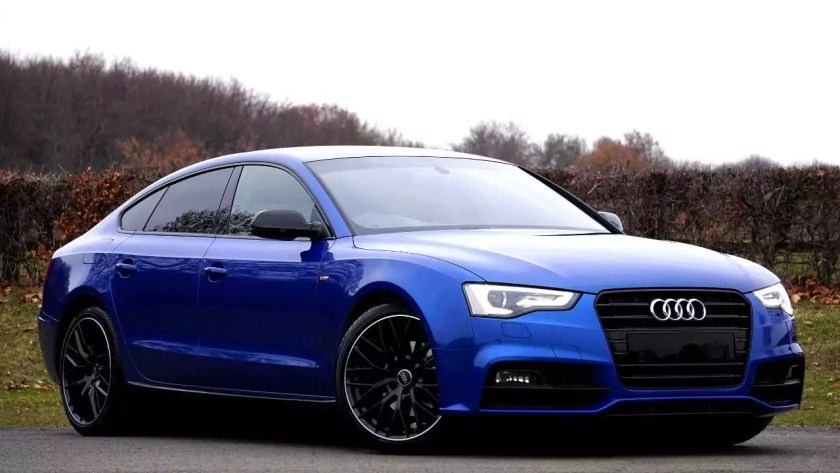
A sedan is a typical example of a four-door passenger car. Sedans often have a three-box design with the engine, passenger, and cargo in separate compartments for better weight distribution and a more stable ride.
In addition, the unibody structure significantly reduces the vehicle’s weight and improves fuel efficiency. This sedan does not have glass windows in the cargo compartment, which provides good protection for the cargo against theft.
This sedan has four doors and a regular trunk. As with many car categories, they range from small (subcompacts like the Nissan Versa and Kia Rio) to compact (Honda Civic, Toyota Corolla), midsize (Honda Accord, Nissan Altima), and full-size (Toyota Avalon, Dodge Charger). Luxury brands such as Mercedes-Benz and Lexus have similarly sized sedans.
#2. Crossover (CUV).
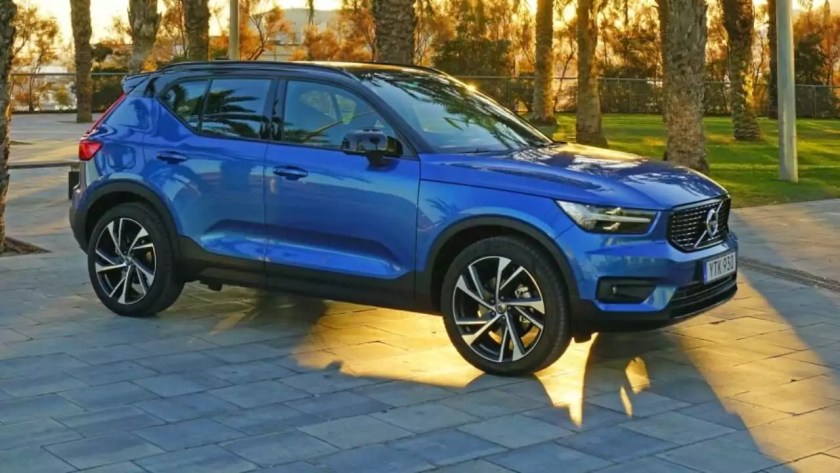
If we had to summarize crossovers in a single phrase, it would be “a combination of an SUV and a hatchback.
Crossovers have the practicality of an SUV but also come with superb fuel efficiency like hatchbacks do, as they are built on a unibody construction that is lighter and consumes less fuel.
#3. Sport Utility Vehicles (SUVs).
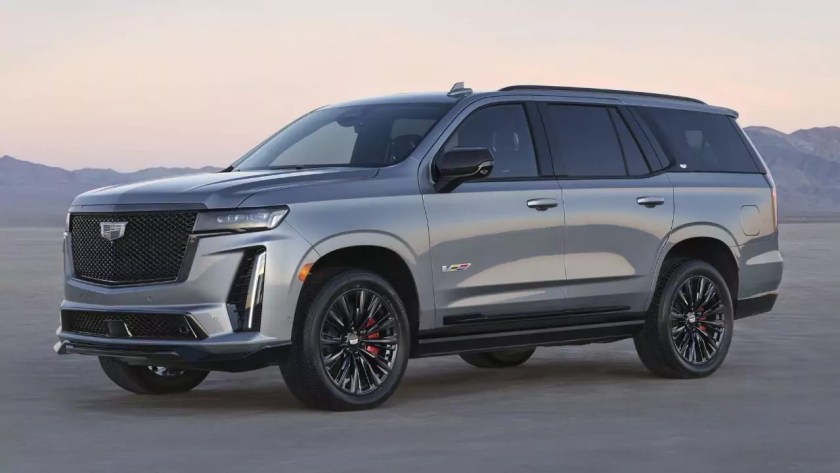
A Sport Utility Vehicle (SUV) is defined by its off-road capabilities and roominess. These types of cars are built with a long journey in mind.
It boasts a comfortable ride in rough, rugged cross-country terrain. It offers a relatively high seating position, which allows a better view of the road.
These functionalities have been made possible by its sturdy body-on-frame construction that is borrowed from trucks. Hence, if you are one of those who enjoy outdoor adventure and expect to tow dirt bikes, an SUV might be best suited to you.
They include a station wagon-like cargo space accessed through a flip-up hatchback door, and many offer all-wheel drive. The larger ones have three rows of seats.
Sizes start at small cars (Hyundai Kona, Nissan Kicks), ranging from medium to full-size (Ford Expedition, Chevrolet Tahoe). Luxury brands offer many SUV models in most of the same size classes.
#4. Hatchback.
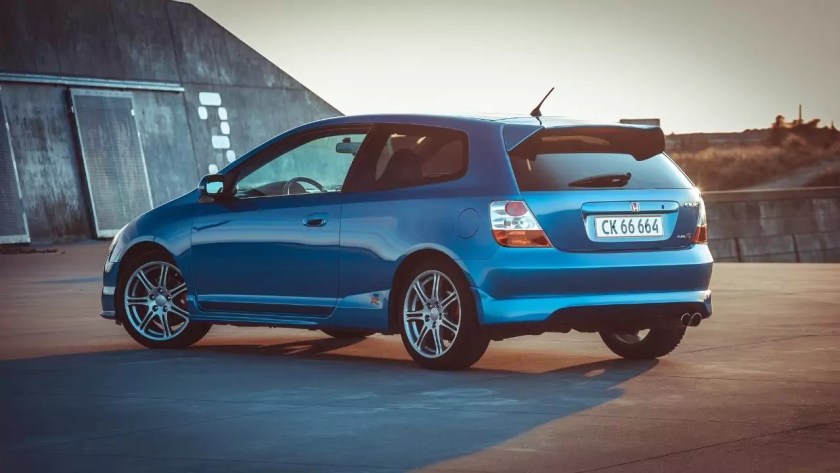
The most noticeable part of a hatchback is its hatch or rear door that swings upward. These types of cars usually come with two or four doors, excluding the trunk door. Hatchbacks are very similar to sedans, with both categorized as passenger cars.
The biggest difference between them is their cargo capacity. Hatchbacks typically haul more pieces of cargo compared to their sedan counterparts.
Moreover, you can remove bulky shopping bags or other heavy pieces more easily. If you prioritize increased cargo capacity and better fuel economy, then a hatchback can be a good fit for you.
The Volkswagen Golf and Kia Rio are two typical hatchback models. More recently, hatchbacks have made their way into some larger cars like the Audi A7 and the Kia Stinger.
They look like sedans, but they actually have a steeply sloping tailgate that provides easier access to the cargo space and greater load capacity than a conventional trunk.
#5. Station Wagon.

Most notably, station wagons, also called estate cars, have the shape of an elongated version of a sedan, offering extra cargo space. The easier way to think about it is it’s a combination of a sedan and a hatchback.
Station wagons are considered to be perfect for large families requiring a reliable hauler. Aside from extra space, station wagons provide better fuel economy in comparison to their SUV equivalents, too.
Some, like the Subaru Outback or Audi A4 Allroad, have elevated ground clearance and some rugged body cladding to make them more like a sport-utility vehicle (SUV), but they are nonetheless closely related to sedans.
Wagons have fallen from favor during the past few decades, and there are relatively few available for sale in the United States.
#6. Coupe.
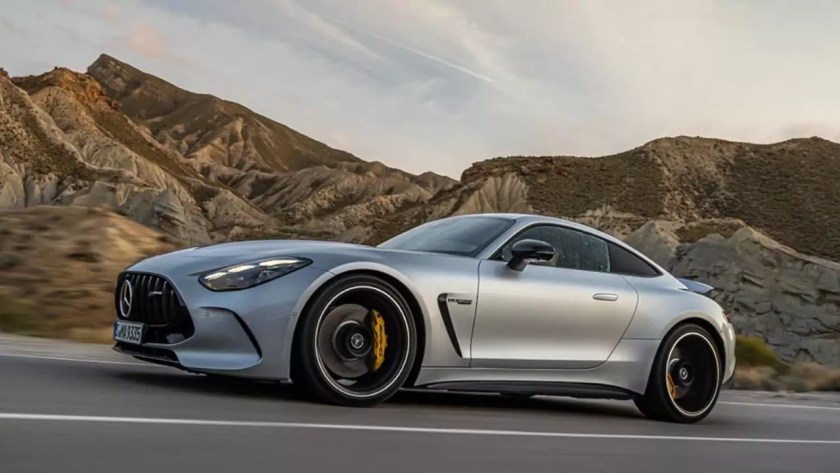
A coupe is a type of car defined by simplicity. The word “coupe” conjures up images of compact sedans. That is a two-door car with a trunk and a fixed roof. But the exciting attraction of this car is the sloping roofline that gives it a more stylish and sportier look.
As far as looks go, coupes are usually loaded with extra bells and whistles, from sharp handling to hundreds of horsepower. This coupe takes up minimal space and is an impressive minimalist car. Not together with family or friends. For single riders or couples who want to explore the world.
Previously, a coupe was considered a two-door car with a trunk and a fixed roof. This includes cars like the Ford Mustang and Audi A5, as well as two-seater sports cars like the Chevrolet Corvette and Porsche Boxster.
Recently, however, automakers have started using the term “coupe” for four-door cars or crossovers with low, sleek rooflines that they consider “coupe-like.” This includes vehicles as diverse as the Mercedes-Benz CLS sedan and the BMW X6 SUV. But we still think of the coupe as a two-door.
#7. Pickup Truck.

A pickup is one of the most recognizable types of cars in the world. It is distinguishable from other automobiles due to its distinct design. Its cargo space is completely divided from its cabin space, and it usually seats no more than 3 or 4 individuals at a time.
A pickup truck has a passenger cab and an open cargo bed in the rear. Virtually all pickups offer some form of all-wheel drive or part-time four-wheel drive, the latter for off-road use only. With one exception, the mid-sized Honda Ridgeline pickup bodies are cabs mounted to a separate steel frame.
The Ridgeline is more like a crossover with the rear section of the roof lopped off to expose a cargo bed. Currently, pickup trucks come in two size categories: full-size and mid-size.
#8. Minivan (MPV).

When designing minivans, the focus is usually on the size of the cabin space rather than the size of the storage space. These types of cars are often associated with station wagons and family cars.
It was made with the specific idea of accommodating a whole family in it. It has a lot of cargo space, but not much compared to the hatchback.
Minivans are the workhorses of the world of family cars, the best way to move people and cargo in one efficient package. They are called minivans, but they are far from “mini”.
That’s because they’re tall boxes on wheels with sliding side doors for easy access and a tailgate that opens up to a large cargo space.
Most minivans have reclining second and third-row seats that can often be removed or even folded into the floor to create huge open cargo space. The Honda Odyssey and Chrysler Pacifica are great examples of this breed.
#9. Roadster.

A roadster car is generally classified as a convertible vehicle, but is more specifically a two-door car, and they usually have no rear seat. Therefore, they are meant for use by only two people. In terms of their size, they are often very small with limited cargo space.
They are usually sporty looking and serve ideal in warm weather if you want to enjoy ice cream with your friend or fiancée. A few common roadster models on the market include the Alfa Romeo 4C Spider, Mercedes-Benz SLC and Jaguar F-Type Roadster.
#10. Van.

A van is a car model built to transport primarily goods – either as a 2-seater or 3-seater vehicle. Vans usually have a sealed cab from the cargo area, and most of the time there are no windows to the cargo area, although some vans have glass windows at the rear doors.
Vans have great utility when transporting goods, usually with a very high load capacity over a ton. Common van brands include the Volkswagen Transporter or the Chevrolet Van or the GMC Vandura.
#11. Sports Cars.

A sports car is a car designed with an emphasis on dynamic performance, such as handling, acceleration, top speed, or the thrill of driving.
A sports car is a small, luxury type of car designed for speed and minimal cargo and cabin space. It’s usually a two-seater and has high stats for handling and speed. Although the sports car is usually considered a luxury car, it is strictly designed for performance.
By definition, sports cars are two-seater convertibles that allow for open-air driving and have a sporty appearance.
Automakers have incorporated remarkable features such as nimble maneuverability, excellent acceleration, and great handling into their sports cars, contributing significantly to their huge amount of power and thrilling ride.
Cars like the Porsche 911 and Mazda Miata are typical sports cars, but you can expand the definition to include muscle cars like the Ford Mustang and Dodge Challenger.
Then there are the exotic high-end dream cars with sky-high prices of one percent, cars like the Ferrari 488 GTB and the Aston Martin Vantage, which stop traffic with their spaceship look.
#12. Convertible/Cabriolet.

Convertibles have been known for their recognizable aesthetics and loving design for decades. These types of cars have been popular for decades because they became icons of cinema and symbols of freedom and youth.
They have retractable canopies and minimal passenger cabins that sometimes only accommodate two people. They also have a small hold.
Can the roof retract into the body and leave the passenger cabin open to the elements? If so, it’s a convertible. Most convertibles have an all-electric fabric roof that folds down, but some have to be lowered by hand.
There are also a number of models with a retractable hardtop as well as some unusual quasi-convertibles (so-called “Targa-Tops”) such as the Mazda MX-5 Miata RF, Porsche 911 Targa and Corvette; only the front part of their roofs can be retracted or removed by hand.
#13. Supercar.

Supercars are fast high-performance cars with powerful, large engines, even an engine making over 500 hp. Most supercars are two-seater cars, and they tend to be very expensive. Some supercars are even priced at over one million dollars.
Depending on the model, the supercar it can be a convertible. Supercars usually have zero or little storage space; in other words, no one buys a supercar for the storage room.
Common supercars include the McLaren 720S, Lamborghini Huracán, Lamborghini Aventador.
#14. Luxury Cars.

What is a luxury car? Luxury cars are exactly what they sound like, luxury. Luxury cars are very expensive and have all the latest, great features for an excellent ride.
Luxury cars often have a powerful engine, but they are not very fast around corners or on the racetrack. They often have so many features for comfort that they tend to get heavy.
Luxury cars can also be a supercar or sports cars and often define an expensive car with comfort. Common luxury cars include the Bentley Continental GT, Ferrari Portofino, and Rolls-Royce.
#15. Jeep.

Jeep is like Kleenex. It’s a product model that’s become synonymous with an entire product line. Jeep, as a model, is designed and built by Fiat Chrysler Automobiles. The Jeep hit the scene in November 1940, just before the USA entered WWII.
They were widely used throughout the war and subsequent wars due to their ability to travel on all kinds of terrain.
In 1987, Chrysler bought the Jeep brand and has expanded the models ever since. While the traditional design is still popular, Chrysler also developed the SUV model Cherokee.
#15. Muscle Cars.

Muscle cars have big muscles in their engine compartments and were usually manufactured in the US. Muscle cars are usually older cars with a large and powerful v8 or v10 engine. Today, there are also modern muscle cars.
Muscle cars are often not very fast around the corners of racetracks but in a straight line as they have been built to do (drag racing), there are not many other vehicles which can beat them.
Some car models that would be include as muscle cars include: Ford Mustang, Pontiac GTO, Dodge challenger.
#16. Microcar.

The microcars/minicars are small cars most often with an engine size of less than a litre. There are outlandish models of microcars/minicars and they are good for city use as they provide excellent fuel efficiency and easy parking.
Microcars/minicars are usually two passenger vehicles. Some examples of microcars include bicycle cars, bubble cars, and the Tata Nano car. Today’s microcars are frequently electric.
The disadvantage of the microcar in most models is the almost non-existent cargo space.
#17. Camper Van.

A camper van is usually a truck chassis rebuilt for camping and usually has a kitchen, toilet, and other necessary accessories for the perfect camping trip. For instance, a motorhome can also refer to a minivan rebuilt for camping, like a Volkswagen transporter.
Either way, many camper vans are built that way from the factory, some examples of a few of those include the Fiat Ducato, Winnebago revel and Nomad Vanz Sprinter.
#18. Mini Truck.

A mini truck is exactly what you think – a small truck, and it is a mix between a pickup and a truck. They usually have two or three seats and open cargo area, but can also have closed cargo area.
Generally, they are built on a truck chassis and generally they are nice and strong as they are designed for heavy use transportation of goods. Some examples of mini-truck includes Nissan clipper, Suzuki carry and Mazda scrum.
#19. Limousine.

A limousine is considered one of the most luxurious cars in the world. These types of cars are noted for their large length and the partition between the back and the front.
The limousine is driven by a chauffeur in most cases and is pre-booked for formal affairs. Limousines are usually owned or used by movie stars, businessmen, dignitaries, or politicians.
#20. Truck.

Finally, at the bottom of the list, you have the truck. While it’s not really a type of car, trucks can take many different forms and are still a form of vehicle, so we wanted to put it down.
Most people can probably recognize what a truck is. Essentially, it is a vehicle type that can either be a two-seater or a three-seater vehicle, and sometimes has a bed behind the seats.
It is a large vehicle type, there is a great deal of cargo space, and its main purpose is for companies to transport their goods. There are many truck manufacturing companies, such as Volvo, Mercedes-Benz, Scania, and DAF.
We have provided you with the most common car types that you will see on websites when you are looking to buy or sell a car, but it is important to recognize that there are smaller car type categories too, and we present to you ten less recognized car types that are worth a mention.
#21. Hot Hatch.

The hot hatch car is a high-performance car that takes its design from the hatchback. It has the same door that swings open in the back and a similar shape.
Though not as spacious or large as the hatchback, it can still fit up to 5 passengers and quite a bit of cargo. It began being manufactured in the late 1980s and is a favorite among consumers in Europe and Asia.
#22. Ute.

A UTE, an abbreviation of utility, is a term for a car typically purchased in Australia and New Zealand for cars with a standing behind the passenger cabin.
It can be driven with a regular driver’s license. It was originally used to refer to cars built on passenger car chassis with the bed attached to the passenger body.
Any vehicle with an open cargo area at the rear is now referred to as a UTE in the New Zealand-Australia region.
#23. Pony Car.
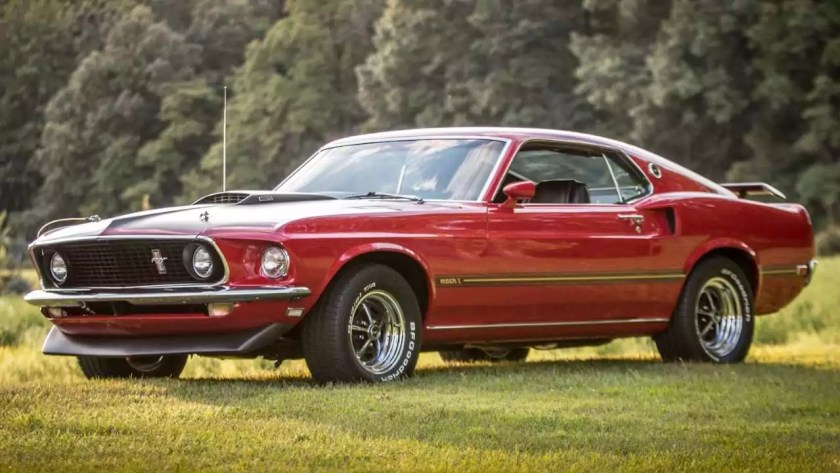
The Pony car has its roots in the Ford Mustangs of the 1940s and 50s. These types of cars were wildly popular in the 1960s and even broke sales records in the US.
It created the pony car craze and was designed as an affordable, compact, and highly stylized alternative for Americans.
The pony car was a very rapid response to customers who wanted small cars that were sporty, stylish, and with some luxury.
#24. Military Vehicle.

A military vehicle is defined as a vehicle that is intended for, or modified for, military use. For some common examples, think tanks, armored personnel carriers, artillery, and the like.
There are two types of military vehicles, built factory direct, or modified. It depends on what military vehicle you are talking about. Each type of military vehicle is established based on the needs of different militaries, but all have the same goal in mind; that is to provide soldiers with the best equipment possible for protection and efficiency.
#25. Dragster.

A dragster is designed for drag racing, typically a straight-line race from one end of the track straight to another where finishing first is the goal.
To finish first a dragster relies on only two things – speed, and acceleration. Some dragster cars have more than 8,000 horsepower!
While the term dragster can also be used for standard cars that are modified to perform in drag racing, dragster typically refers to a true dragster like the one pictured above.
#26. Grand Tourer.

A grand tourer is typically a high-performance luxury car capable of long-distance driving. The term “grand tourer” or “GT” is sometimes used to mean just a high-performance sports car, however a grand tourer is usually less of a sports car, and more spacious and comfortable.
Most grand tourers have two seats and occasionally have 2+2 seats, and usually have sporting power, and a great suspension to manage curves.
#28. Hot Rod.

A hot rod is all about engine performance, style and attitude. In short, it’s a classic American car that is modified to improve performance. This can have modifications done to the engine, suspension or any other component of the car.
Hot rods are usually old-school cars, which is typically defined as something like a muscle car or even a classic car. Most hot rods take their base of vehicle from same type of cars to obtain that better hot rod look, but really, you can make a hot rod out of just about any old car with the right modifications.
#29. Low Rider.

A low-rider can be pretty much any type of car that is lowered but commonly refers to old American lowered cars using air suspension. This is commonly done by modifying or replacing the suspension, springs, and shock absorbers of the car.
Low-rider cars are often considered a style of car and many are fans of them for the customization and modification aspects of it.
#30. Electric car.

I cannot wait to lease my next car, which will be an electric car. This is an exciting time because, over the next few years, most automobile makers will be rolling out many electric car options. Audi, Porsche, BMW, and Mercedes are all rolling out a fleet of electric cars.
Tesla, of course, is the current top dog in the arena, but it will be facing tougher and tougher competition over the next 5 years. GM’s Volt is also a good option.
While I like Tesla’s designs, it doesn’t come close to how cool the first Porsche electric car looked. Check it out… Mission E. What I love about Mission E is it’s a 4 door and still looks super cool. I have young kids, so a 2-door is out of the question.
Classifications Of Cars
Cars are classified into various categories depending on several factors. Here is a list of those classifications.
1. Based on Body Style:
Vehicles are categorized according to the styling of the body. Some of the cars that come under this group are convertibles, coupes, hatchbacks, minivans, crossovers, etc.
2. Based on the Car Segment:
Vehicles are categorized based on the elements that your car has. Subcompact cars, green cars, compact cars, muscle cars, and luxury cars are some examples of this group.
3. Based on Size:
These vehicles are segregated based on their size. Microcars, compact cars, mid-size cars, and extra-large cars are some of the examples in this group.
4. Based on Fuel:
Vehicles are divided based on the type of fuel used in them. Some of the cars that come under this group are diesel cars, electric cars, natural gas cars, hydrogen cars, etc.
5. Based on Purpose:
This is a category of vehicles that are divided according to the purpose they are used for. Commercial cars, family cars, exotic cars, racing cars, and sports cars are some of the vehicles that come under this group.
What is the most popular car type?
The most popular car type in the US is the mid-sized sedan. However, there is no simple answer to this question, as it depends on what region of the world you are looking at. SUVs, Sedans, compacts, and trucks are very popular all over the world.
How many types of cars are there?
There are over 25 different types of cars, depending on how you want to group them. There are many different ways to categorize car types or models, like by body style (Sedan), size (compact), car segments (Muscle Cars), purpose (Family Cars), and fuel type (Electric vehicle). There are also over 400 car models available in the market today.
What types of cars can pull a trailer?
Any type of car with a hitch can pull a trailer. Some cars come with a hitch installed at the factory, and others might allow you to upgrade to one as an add-on.
However, if you are looking for a car that can haul a heavy trailer, you should look for an SUV or truck.
What vehicle type is the safest?
There is no simple answer to this question. Different types of vehicles are safest under different situations. Though generally, larger and heavier vehicles are considered safer than others, you must still consider the rest of the car’s safety features and safety preferences.
For example, a smaller car would typically be less safe in a collision than a larger car, and an SUV would typically offer more protection in the event of a collision than any other vehicle type.
What type of car is best for learners?
Most learners find it easy to learn in a smaller car that is easy to control and has good visibility. Although most larger cars are typically safer, it is important for you feel comfortable and safe while learning.
There are so many ways you can divide car types, probably into hundreds of different car types, depending on how far you want to stretch them. In saying that, the types of cars listed above are the most common types of cars that you will encounter when looking at any car marketplace.
I hope this list gives you a good starting point to figure out which car type you should get. If you’re still unsure after going through this post, feel free to reach out to us in the community, and we can help steer you in the right direction!